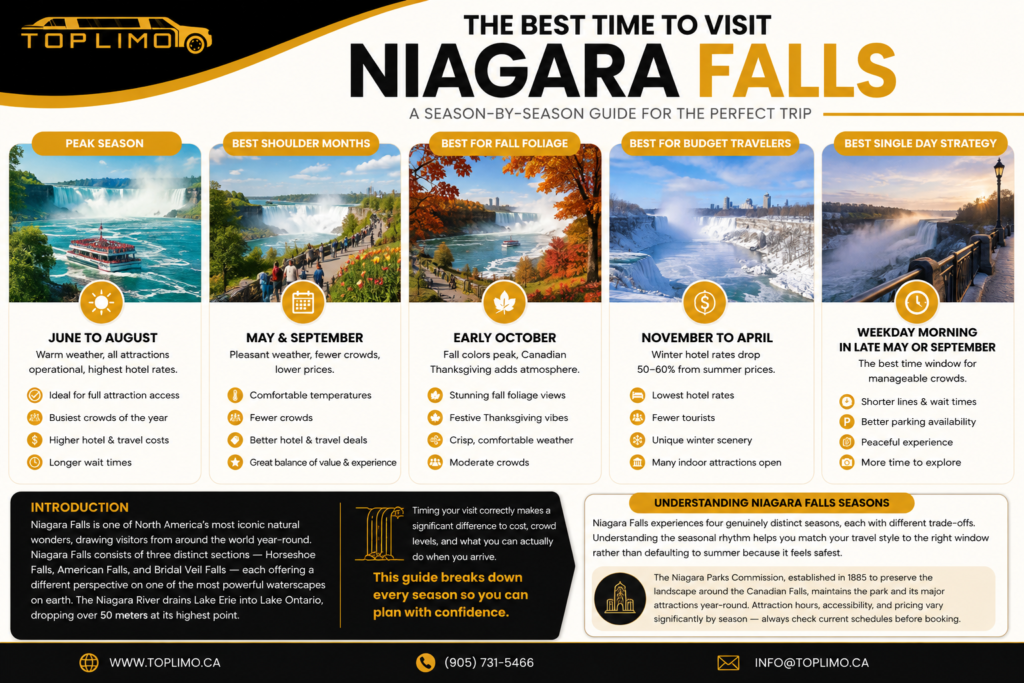
The best time to visit Niagara Falls depends on what you want from the trip. June through August delivers full attraction access and warm weather. May and September offer the same scenery with smaller crowds and lower prices.
Key Takeaways
- Peak season: June to August — warm weather, all attractions operational, highest hotel rates
- Best shoulder months: May and September — pleasant weather, fewer crowds, lower prices
- Best for fall foliage: Early October — fall colors peak, Canadian Thanksgiving adds atmosphere
- Best for budget travelers: November to April — winter hotel rates drop 50–60% from summer prices
- Best single day strategy: Weekday morning in late May or September for manageable crowds
Introduction
Niagara Falls is one of North America’s most iconic natural wonders, drawing visitors from around the world year-round. Niagara Falls consists of three distinct sections — Horseshoe Falls, American Falls, and Bridal Veil Falls — each offering a different perspective on one of the most powerful waterscapes on earth. The Niagara River drains Lake Erie into Lake Ontario, dropping over 50 meters at its highest point. Timing your visit correctly makes a significant difference to cost, crowd levels, and what you can actually do when you arrive. This guide breaks down every season so you can plan with confidence.
Understanding Niagara Falls Seasons
Niagara Falls experiences four genuinely distinct seasons, each with different trade-offs. Understanding the seasonal rhythm helps you match your travel style to the right window rather than defaulting to summer because it feels safest.
The Niagara Parks Commission, established in 1885 to preserve the landscape around the Canadian Falls, maintains the park and its major attractions year-round. Attraction hours, accessibility, and pricing vary significantly by season — always check current schedules before booking.
Summer (June to August): Peak Season
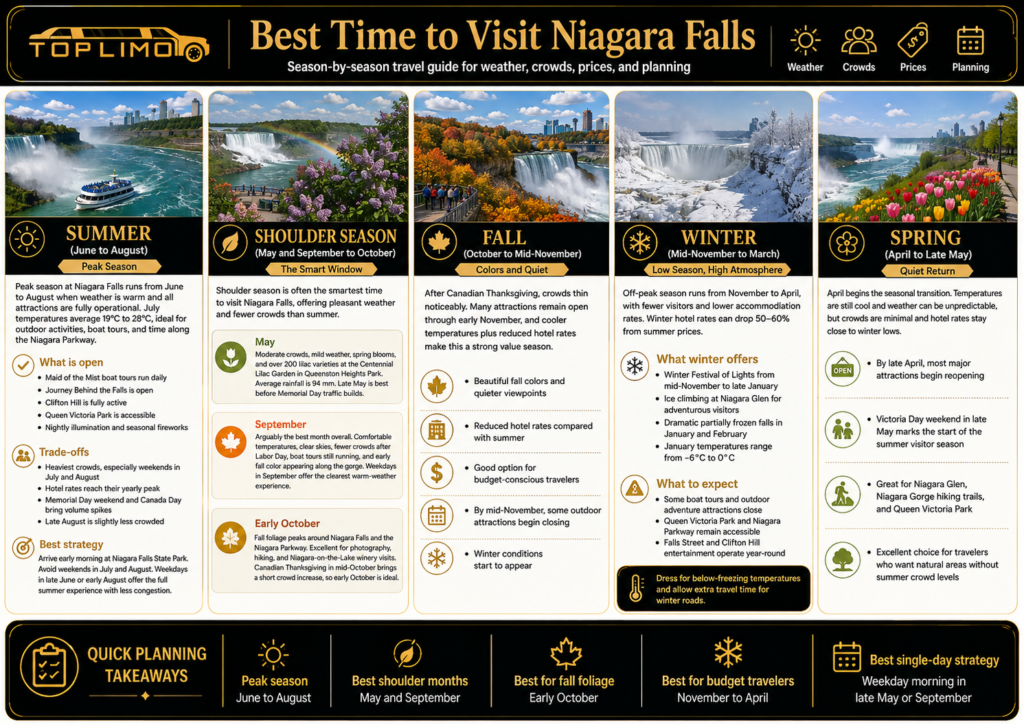
Peak season at Niagara Falls runs from June to August when weather is warm and all attractions are fully operational. July temperatures average between 19°C and 28°C — comfortable for outdoor activities, boat tours, and extended time along the Niagara Parkway.
What is open: Every major attraction operates at full capacity during summer. The Maid of the Mist boat tours run daily. Journey Behind the Falls, Clifton Hill, and Queen Victoria Park are all accessible. Every evening, Niagara Falls is illuminated with vibrant colors and features seasonal fireworks displays.
The trade-offs:
- Crowds are at their heaviest, particularly on weekends in July and August
- Hotel rates reach their annual peak
- Memorial Day weekend and Canada Day (July 1) bring significant volume spikes
- Late August sees a gradual drop-off in summer crowds — worth targeting if your schedule allows
Best strategy for summer visitors: Arrive early morning at Niagara Falls State Park for fewer crowds. Avoid weekends in July and August to escape the peak crowd experience. Weekday visits in late June or early August offer the full summer experience with meaningfully less congestion.
Shoulder Season (May and September to October): The Smart Window
Shoulder season is widely considered the best time to visit Niagara Falls for travelers who want the experience without the peak-season friction. May has moderate crowds and pleasant weather. September offers clear skies and fewer crowds after Labor Day.
May
Spring blooms include over 200 lilac varieties in May at the Centennial Lilac Garden in Queenston Heights Park — one of the most underrated seasonal features in the entire Niagara region. Average rainfall in May is 94 mm, so pack accordingly, but milder temperatures and manageable crowds make it one of the most rewarding months to visit.
Visit in late May for manageable crowds before Memorial Day weekend, when summer traffic begins building in earnest.
September
September is arguably the single best month on the calendar for a Niagara Falls trip. Temperatures remain comfortable, the summer crowds have thinned after Labor Day, boat tours are still running, and the early signs of fall color begin appearing along the gorge. Visit Niagara Falls on weekdays in September for the clearest, least congested experience of any warm-weather month.
Early October
Fall foliage peaks in early October around Niagara Falls, with the Niagara Gorge and Niagara Parkway producing some of the most spectacular color in Southern Ontario. Canadian Thanksgiving falls in mid-October and brings a short crowd increase, but early October before the holiday is genuinely exceptional for photography, hiking, and the local wineries of Niagara-on-the-Lake. Niagara on the Lake tourism provides current winery tour information and seasonal event schedules.
Fall (October to Mid-November): Colors and Quiet
After Canadian Thanksgiving in mid-October, crowds thin noticeably. Many attractions remain open through early November, and the combination of fall foliage, cooler temperatures, and reduced hotel rates makes this a strong window for budget travelers who do not need every summer attraction to be operational.
By mid-November, some outdoor attractions begin closing for the season. The shoulder season effectively ends around this point and winter conditions begin settling in.
Winter (Mid-November to March): Low Season, High Atmosphere
Off-peak season runs from November to April, featuring fewer visitors and lower accommodation rates. Winter hotel rates can drop 50–60% from summer prices, making this the most accessible season for budget travelers willing to trade warm weather for dramatic scenery and significantly lower costs.
What winter offers:
- Winter Festival of Lights runs from mid-November to late January — one of the most impressive illumination events in Canada, with the falls themselves as the centrepiece
- Ice climbing at Niagara Glen is available in winter for adventurous visitors
- The partially frozen falls in January and February create a visual unlike any other season
- January temperatures range from -6°C to 0°C — dress for below-freezing temperatures and allow extra travel time for winter road conditions
What to expect: Some boat tours and outdoor adventure attractions close for winter. Queen Victoria Park and the Niagara Parkway remain accessible. Falls Street and Clifton Hill entertainment options operate year-round.
Spring (April to Late May): Quiet Return
April marks the beginning of the season transition. Temperatures are still cool — March through April can be unpredictable — but crowds are minimal and hotel rates remain near their winter lows. By late April, most major attractions begin reopening for the season. Victoria Day weekend in late May signals the official beginning of the summer visitor season and the point at which crowds begin building toward their peak.
Spring is a strong choice for travelers who want to explore the natural areas — Niagara Glen, the Niagara Gorge hiking trails, and Queen Victoria Park — without competing with summer volumes.
Niagara Falls at Night
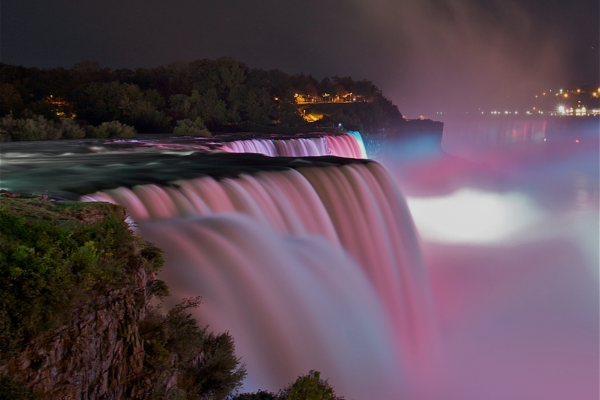
Every season offers the evening illumination experience. Each night, Niagara Falls is illuminated with vibrant colors that transform the falls into a different kind of spectacle entirely. Seasonal fireworks displays run on specific dates throughout the summer. Queen Victoria Park offers excellent vantage points for viewing Niagara Falls during the day and at night, and the Canadian side consistently provides the most panoramic views of all three falls simultaneously.
Horseshoe Falls — the largest of the three waterfalls — is located mostly on the Canadian side. The American Falls is situated entirely within the United States and is wider than Horseshoe Falls. Bridal Veil Falls is the smallest of the three, located on the US side. The Canadian perspective encompasses all three, which is why the Canadian side remains the preferred vantage point for most visitors.
Planning Your Niagara Falls Trip From Toronto
The drive from Toronto to Niagara Falls covers approximately 130 kilometers via the QEW and takes between 1.5 and 2.5 hours depending on traffic and season. A professional limo service removes the stress of navigating the route yourself, handles parking logistics, and lets every passenger in the vehicle focus entirely on the day ahead rather than the drive.
Top Limo provides flat-rate transfers from Toronto to Niagara Falls year-round, with service available for day trips, wine tours, and multi-stop itineraries across the Niagara region. Contact Top Limo to confirm availability and get a quote for your travel dates.
Frequently Asked Questions
What is the best time to visit Niagara Falls from Toronto?
The best time to visit Niagara Falls is June to August for full attraction access, or May and September for fewer crowds and lower prices. Fall foliage peaks in early October, making it a strong choice for scenic visits. Winter offers the lowest hotel rates — dropping 50–60% from summer — and the Winter Festival of Lights from mid-November to late January. Your ideal window depends on budget, crowd tolerance, and which attractions matter most to your group.
When is peak season at Niagara Falls?
Peak season at Niagara Falls is from June to August when weather is warm and all major attractions are fully operational. July is the busiest single month, with the warmest temperatures and the highest visitor volumes. Canada Day on July 1 and Memorial Day weekend in late May both generate significant crowd spikes. Weekends throughout July and August are the most congested periods of the year — weekday visits during these months offer a noticeably better experience.
Is shoulder season a good time for a Niagara Falls trip?
Yes — shoulder season is widely considered the best time to visit Niagara Falls for travelers who want the scenery without peak-season crowds and prices. May offers spring blooms and manageable visitor numbers. September offers warm weather, clear skies, and a noticeable drop in crowds after Labor Day. Both months allow access to the major attractions, boat tours, and local wineries of Niagara-on-the-Lake, while hotel rates sit meaningfully below their summer peak.
What should budget travelers know about visiting Niagara Falls?
Budget travelers get the most value by visiting between November and April, when winter hotel rates drop 50–60% from summer prices. The Winter Festival of Lights runs mid-November to late January and is one of the region’s most impressive seasonal events. Shoulder season in May and September also offers lower prices relative to summer. Weekday visits in any season consistently outperform weekends on both cost and crowd levels.
What is the best time of day to visit Niagara Falls?
Arrive early morning — ideally at opening time — for the fewest crowds and the clearest views from Queen Victoria Park and the Niagara Parkway. Mornings also offer the best light for photography of Horseshoe Falls and the gorge. Evening visits are worthwhile year-round because Niagara Falls is illuminated with vibrant colors every night, with seasonal fireworks displays in summer. Midday in peak season is consistently the most crowded and least comfortable window.
Conclusion
Niagara Falls rewards visitors in every season, but the experience varies dramatically depending on when you go. Summer delivers the full spectacle with all attractions running. Shoulder season — particularly May and September — offers the same beauty with fewer people and lower prices. Fall brings some of the most photogenic conditions of the year. Winter strips the crowds away entirely and reveals a version of the falls that most visitors never see. Plan your visit around your priorities, book your transportation early, and make the journey as enjoyable as the destination.
Contact Top Limo to arrange flat-rate transfers from Toronto to Niagara Falls for any season.